
In this guide
Two people, one disputed passage
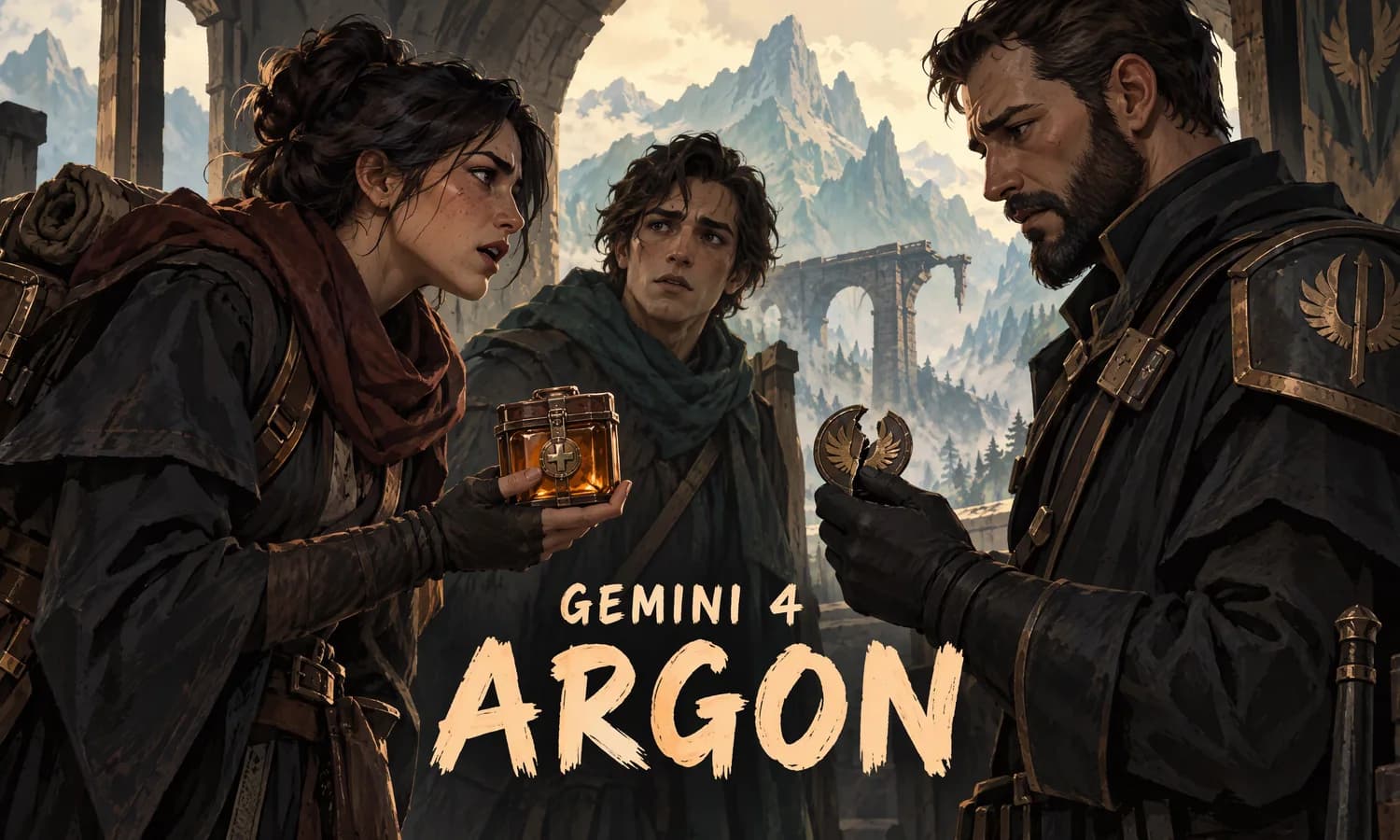
At a mountain checkpoint, a courier needs the road opened before dusk. The guard refuses because the bridge has not been inspected. “My sister is waiting for the medicine,” the courier says. “Then help me make sure someone can carry it across,” the guard replies. Neither speaker needs an elaborate accent to become a character.
This original scene shows the dialogue task we would give Gemini 4 Argon: express two understandable motives without settling the player’s decision. It is a writing exercise, not recorded model output. The player can inspect the bridge, propose a rope crossing, or investigate why the inspection was delayed.
Why style control matters more than an accent
Google’s October 13 Argon release reports better style-instruction following and reduced repetition compared with previous Gemini models. That is a useful reason to test whether a courier can speak urgently while a guard stays concrete and procedural. Google’s claim concerns general writing; it does not measure NPC consistency over an RPG campaign.
Describe speech through behavior: the courier asks short questions and names people; the guard names hazards and asks for evidence. Avoid making both characters deliver polished speeches about their feelings. One interruption, an unfinished request, or a glance at the medicine case can convey pressure while leaving the conversation playable.
Give each NPC a boundary of knowledge
Keep three facts separate. The courier knows the medicine must arrive tonight. The guard knows the bridge has an uninspected support. Only the inspector knows why they never returned. Do not let either checkpoint speaker reveal the inspector’s location simply because that information appears elsewhere in the scenario brief.
A useful response to “What are you hiding?” might be the guard placing a broken inspection badge on the counter. That reveals a concern and creates a lead; it need not reveal the whole mystery. If the player earns more information, update what that character knows before the next exchange. A larger context allowance alone does not enforce this separation.
A dialogue brief you can actually test
Try: “Run the mountain checkpoint conversation. The courier wants medicine delivered tonight and speaks in short personal requests. The guard wants evidence the bridge is safe and answers with specific hazards. Each knows only their assigned facts. Respond to my stated action with a brief exchange, one observable reaction, and an unresolved choice. Do not choose my words or feelings.”
Test an accusation, an offer of help, and an unexpected compromise. Check whether the voices stay distinct without names, whether unsupported secrets escape, and whether the compromise changes the conversation. A narrator should let a credible proposal matter; repeating the initial refusal forever is not character consistency.
Bring the conversation into your next adventure
For a Playworlds Custom World, manually enter the checkpoint, medicine deadline, and damaged bridge. Make your character a traveler who can help but has a reason to hurry. Open with a concrete offer: “I will inspect the support if you show me where the last inspector stopped.” The destination does not automatically import this prompt.
Use the game’s available narration choices. Argon is the research focus here, and the current new-adventure policy reviewed for this article offers Standard and Pro. This dialogue exercise changes no model setting. Judge the scene by whether the people react believably and your offer creates a new decision.