
In this guide
The gate you opened changes tomorrow’s argument
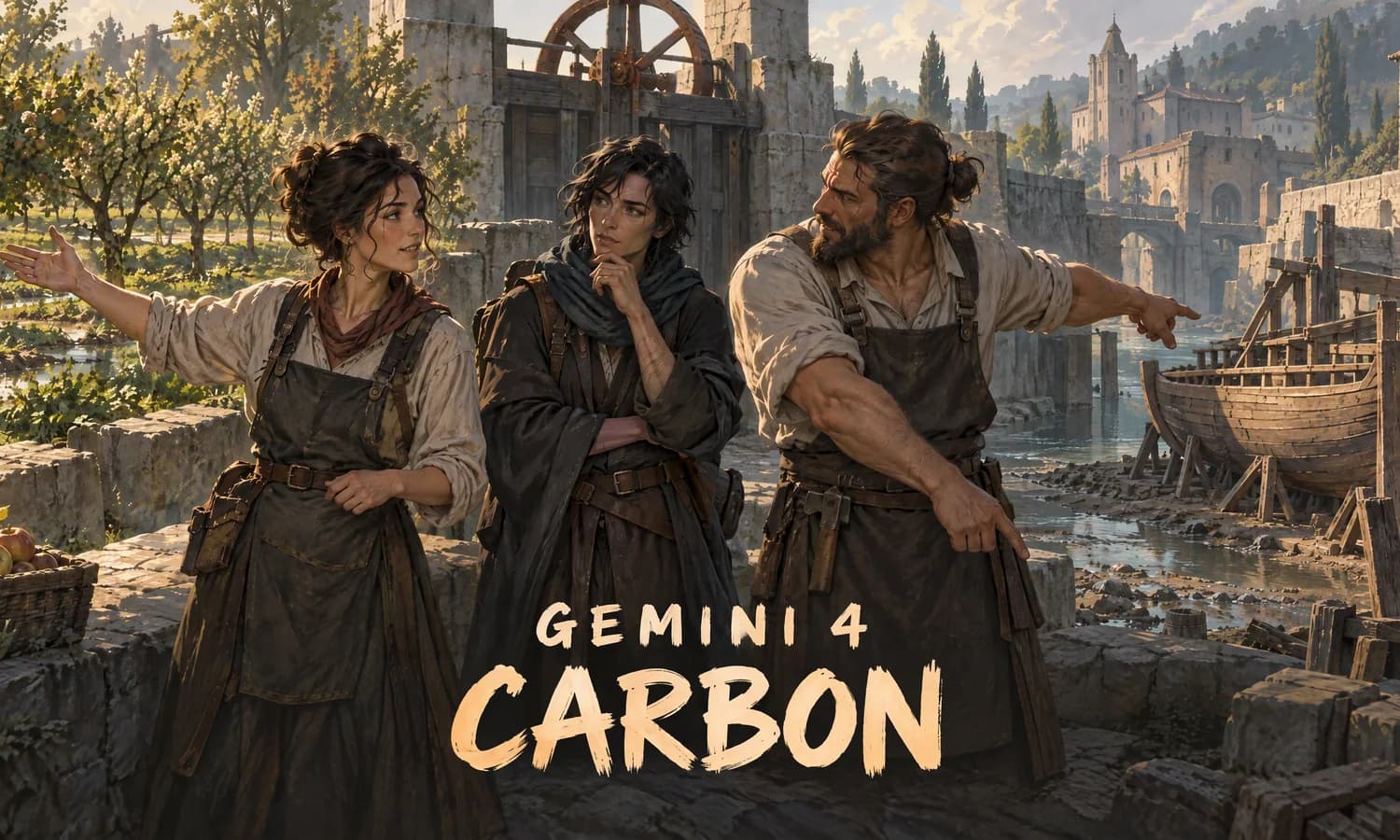
You opened the orchard sluice to save a drought-stricken harvest. By morning, the boatbuilders’ canal is too shallow to float their unfinished ferry. The orchard keeper thanks you; the shipwright demands a repair plan. Neither response requires a surprise villain. Both follow from a choice the game has already accepted.
This original canal-town example explores a possible role for Gemini 4 Carbon: connecting established consequences to believable faction intentions. It is a design exercise, not a model transcript, a measured memory improvement, or a claim that Carbon powers Playworlds.
Sustained reasoning does not create a saved campaign
Google’s October 28 announcement reports that Carbon persisted through difficult engineering work over long stretches. That is a reason to investigate planning across connected situations. It does not demonstrate persistent RPG memory or prove that a model will recall a promise after a player returns days later.
Write down the accepted facts first: the sluice was opened, the orchard received water, the ferry remains grounded, and you promised to attend tomorrow’s council. Keep those facts in the campaign record. Give the narrator the relevant record when the council begins, instead of asking it to reconstruct a convenient history.
Give factions intentions, not guaranteed outcomes
The orchard keeper might propose a temporary water schedule. The shipwright might seek materials for a deeper channel. Those are intentions: either can change when the player brings evidence or offers help. Do not write “the council condemns you” as an unavoidable future event simply because it produces a dramatic chapter.
Keep knowledge limited as well. The shipwright knows the ferry is grounded, but may not know you acted to save the harvest. The keeper knows the crops were failing, but may underestimate the ferry’s importance. A convincing negotiation lets the player connect those perspectives without handing every NPC the entire scenario brief.
Test the return scene and an unexpected compromise
Pause after the sluice decision. On returning, ask what the town remembers before offering to help dredge the channel in exchange for keeping the orchard alive. Check whether the grounded ferry, your promise, and both factions’ interests survive. Then try a different proposal without changing the starting facts.
For a future Carbon evaluation, compare the same council with another accessible model. Record contradictions, unwanted decisions made for the player, and corrections needed to resume. This tests continuity and agency together. A longer answer that invents a solved dispute should not outrank a short response that leaves a meaningful choice.
Build a canal town worth returning to
For Playworlds Custom World, manually enter the sluice, orchard, boatyard, and council deadline. Make your character responsible for the water decision, then begin with a repair offer rather than a demand for forgiveness. The destination does not transfer this text into the creator or install a campaign-memory workflow.
Carbon remains a proposed narration and planning candidate in this article. Google’s cited announcement describes broader access as coming soon; the reviewed Playworlds new-adventure policy offers Standard and Pro. Play with the choices available now, and evaluate any future model by whether your town still reflects the decisions you actually made.