
In this guide
Start with what the map actually shows
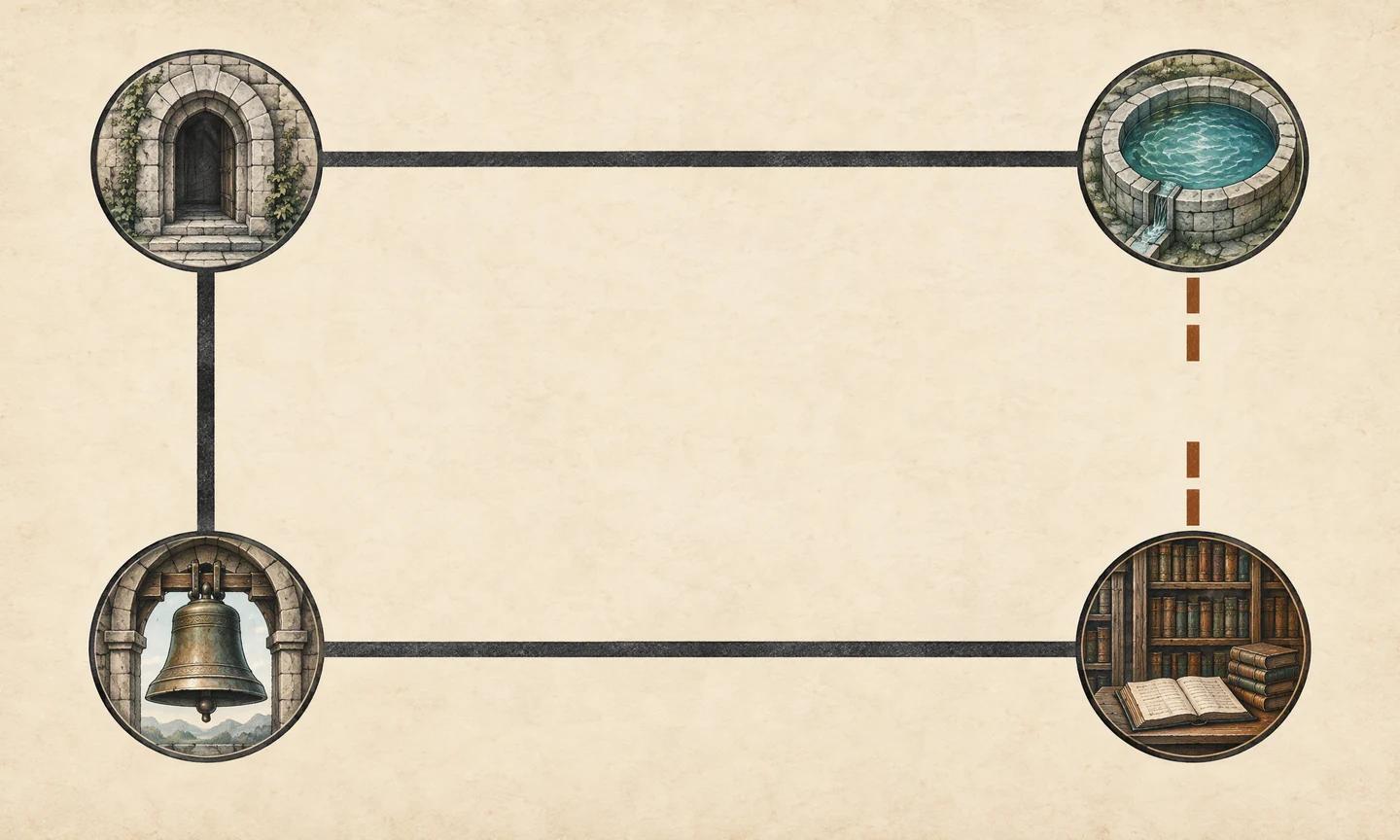
Sketch four rooms: an entry hall, a cistern, a bell gallery, and an archive. Connect the hall to the cistern and gallery. Draw a clear door from the gallery to the archive. Between the cistern and archive, add a dashed line with no label. If the narrator treats every line as a corridor, it has already changed the dungeon.
DeepMind’s Gemini 4 Carbon model card documents image inputs and text output. Google opened Carbon to paying developers through the Gemini API on November 10, 2026. A dungeon sketch is a practical way to try image understanding. Google’s launch material does not show whether Carbon can follow your map over several turns.
Turn the picture into routes you can check
Ask Carbon to list named rooms and confirmed connections before writing any prose. A useful extraction says the archive is reachable through the bell gallery. It flags the dashed line as ambiguous and asks whether it represents a hidden passage, a flooded channel, or a pencil mark you meant to erase.
For a second pass, label it “collapsed water channel; no passage” and ask for the updated routes. Check whether the model removes the proposed shortcut while preserving the door from the gallery. An invented connection can invalidate a puzzle even if everything else about the description sounds right.
Split the GM’s map from the player’s view
Write a GM note for each room: what’s there, what a visitor sees immediately, and what requires investigation. In the archive, a ledger is visible through a grille, but the release catch is under the reading stand. From the gallery, the player can see the grille and hear the cistern drip; the catch stays out of the narration until someone examines the stand.
Use this prompt: “Make a room key and a separate player-facing opening. Label every unconfirmed connection. Use only confirmed routes when describing movement. Leave concealed features out of the opening until my character looks for them.” Check the route list against your own sketch before using either version.
Walk the map one door at a time
In Playworlds Custom World, manually enter the checked room list and the opening situation: the archive will close when the bell rings, and your character needs a name from the ledger. Start with “I stand in the gallery and look through the archive grille.”
You can bring the text notes without importing the map or selecting Gemini 4 Carbon inside the game. The sketch exercise is an example you can run separately with model access.