
In this guide
Decide what the roll is for
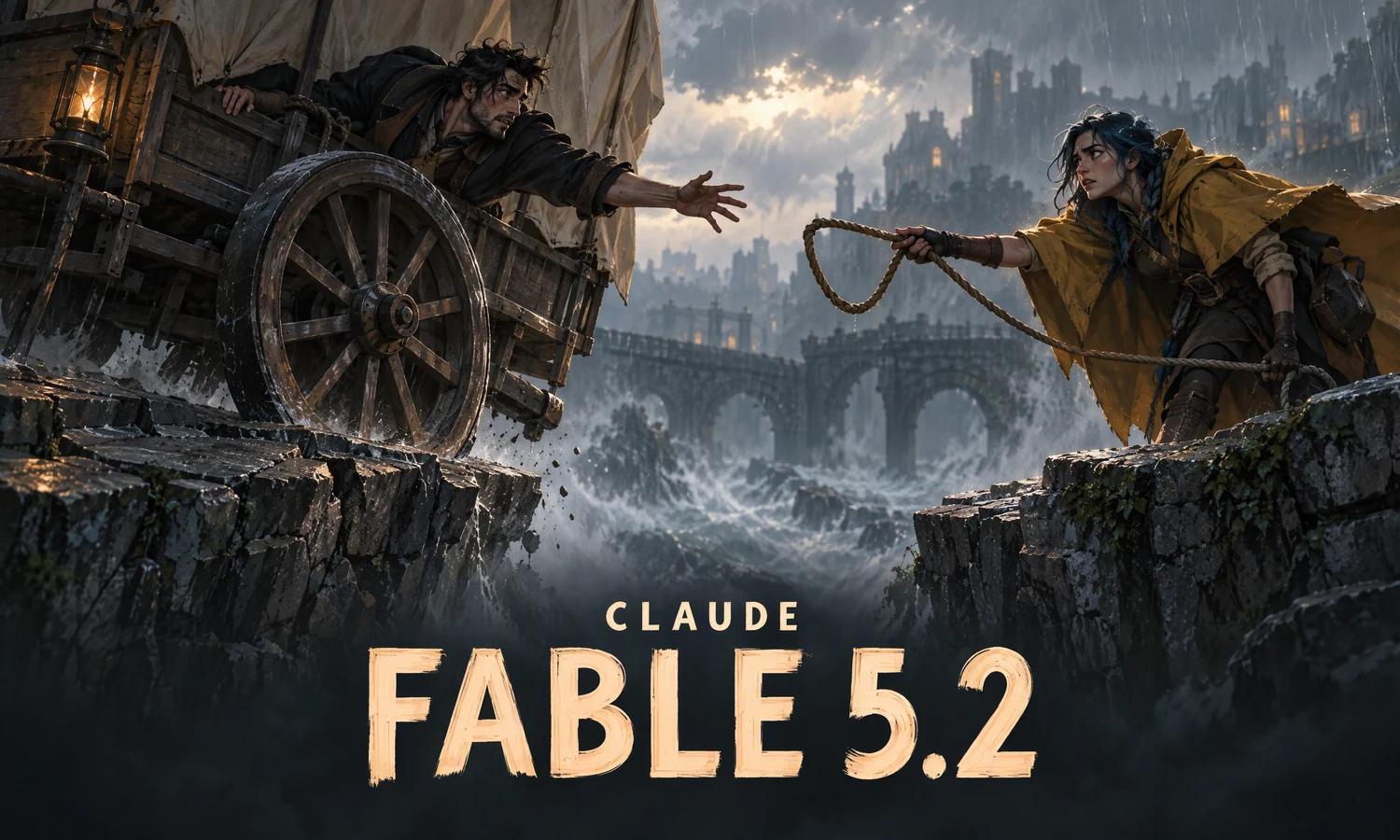
A wagon is stuck where a bridge has split. Your character wants to send a line to the driver before the wheel slips. Ask what the check would resolve: getting a line within reach, tying it securely, or moving the wagon? A single roll to “save everything” makes it hard to tell what success earns.
The DM might say, “On a success the driver catches the line. On a failure the line falls short and the wagon shifts. You’ll have to act from a worse position.” Now you can choose whether to risk the check, try a different approach, or spend a resource you’ve actually recorded.
What a reasoning model can help with
Claude Fable 5.2 uses adaptive thinking, and Anthropic exposes a setting for reasoning effort. That gives you a way to vary the test: does more deliberation help when a player proposes an unusual action? A long explanation can get in the way once the stakes and result are already clear. Anthropic’s model specifications do not verify D&D rules accuracy.
Keep three things separate: the rule or house ruling that applies, the result you supply, and the event the narrator describes. When an official rule matters, bring the relevant text from your edition. Ask the model to identify uncertainty rather than filling a gap with a confident rule citation.
Reuse the same turn with two outcomes
Try this prompt: “You are running the broken bridge scene. State what my proposed check can accomplish and the consequence of failure. Wait for my result. Then narrate only what that result changes and ask what I do next. Don’t add an item to my inventory or spend one without a reason.”
Replay the turn twice, once with a success and once with a failure. On failure, the driver can still tell you there is a ladder under the wagon seat. That gives you a lead without handing you the original objective. If the second version simply gives you the line anyway, the roll didn’t change the encounter.
Check the ruling during play
In a Playworlds AI D&D adventure, describe an attempt and compare the response with the character sheet and any displayed check result. Available mechanics depend on the world. If a result and the prose disagree, point to the specific outcome before moving on.
The bridge is a worked example, and the game does not offer Fable 5.2 as a new-adventure selection in the configuration reviewed for this guide. Use the game’s available choices to see whether your next risky turn gives you a decision you understand.