Playing better
Your First AI RPG Combat: Actions, Dice, and Failed Rolls
Learn how to describe a combat attempt, read a dice result, respond to a setback, and choose your next move in an AI roleplaying adventure.
3 min read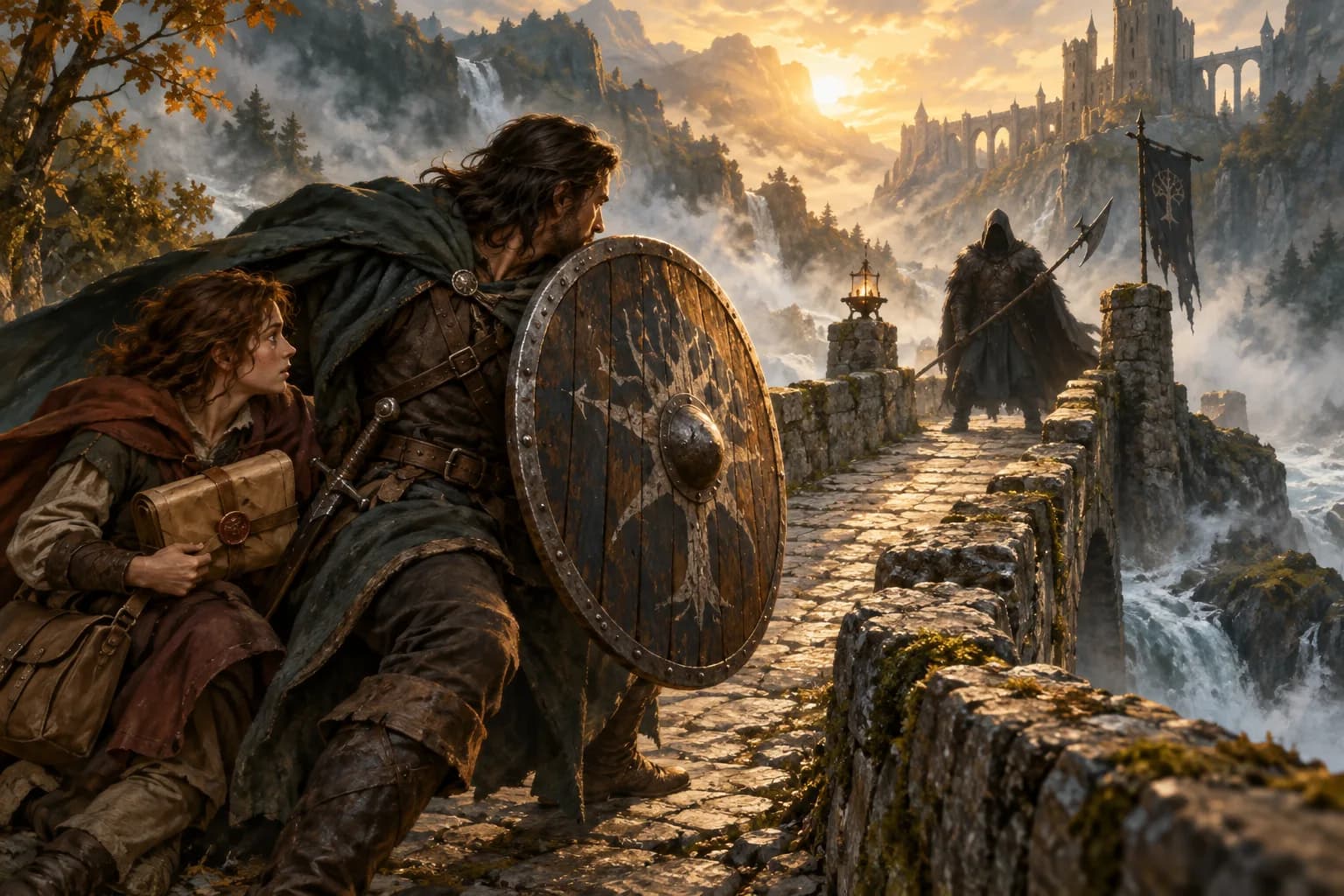
In this guide
Start with the situation, not the attack
When danger appears, identify your goal before choosing an action. Do you need to escape, protect someone, reach a door, or defeat an opponent? In this original example, a raider blocks a bridge while a wounded courier waits behind you. Getting the courier across may matter more than winning a duel.
This is a guide to making clear decisions in a Playworlds adventure, not a complete D&D rules reference or a recorded combat test. Worlds and modes can differ. Read the current scene, your character sheet, and the choices shown by the game instead of assuming a tabletop rule or ability is implemented in every situation.
Check what your character can use
Look at your available equipment, abilities and current condition. If you want to use a spell or item, check that your character actually has it and whether the game shows a relevant limit. Your backstory and portrait do not supply equipment that is absent from the sheet.
Clarify one missing fact if it affects your decision: Is there cover beside the bridge? Can the courier move? Avoid asking the narrator to choose the best move for you. A focused question gives you the information to decide.
Describe an attempt and leave the result open
A useful action names intent and method: I keep my shield toward the raider and try to draw their attention while the courier moves toward the gate. This gives the scene a goal and an approach. It does not declare that the raider is fooled or the courier has escaped.
Use one immediate attempt rather than a chain of guaranteed outcomes. If the game presents specific combat controls or a pending choice, follow those controls. Sending another free-text action does not necessarily resolve a waiting roll or selection.
Read the roll and the resulting state
Some attempts lead to a dice step. Playworlds includes a dice presentation and an automatic-roll preference; follow the prompt shown in your session and allow the step to finish. You do not need to invent a roll result inside your action text.
After resolution, read both the narration and any updated game information. A roll is evidence for the resolved attempt, not permission to assume several later actions also succeeded. If a displayed result and the prose disagree, state the exact mismatch and ask for clarification before building your next move on it.
A failed roll changes the question
Suppose the raider ignores your distraction. Your next choice could be to seek cover, negotiate, or use another available ability. First read what the response actually changed. Do not assume a miss automatically causes damage, loses an item, or ends the adventure unless the game establishes that consequence.
Repeating the same action until it succeeds can flatten the scene. Change your approach because of new information: call to the courier to retreat, look for a safer crossing, or ask what the raider wants. Retreat and negotiation can be meaningful decisions when the situation allows them.
Finish by checking the next objective
When the immediate danger passes, review the courier's situation and your character's visible condition. Decide whether the next step is travel, recovery, a conversation, or another unresolved choice. Do not assume resources have reset simply because the narration sounds calm.
For a first adventure, choose a manageable goal and learn one interaction at a time. Browse worlds, sign in to play and save, and check current access requirements. The purpose of the first encounter is to understand how your decisions and the game's results connect.