
In this guide
Your first minutes in Playworlds
You can play a solo D&D-style adventure without organizing a group or finding a human dungeon master. In Playworlds, an AI game master describes the scene while you decide what your character attempts. Playworlds is an independent game, not an official Dungeons & Dragons product; read the world's adaptation and playstyle notes before starting.
First, browse the world library and choose a setting with a problem that interests you. Then sign in with Google or Discord to play and save. Follow the world's adventure setup to select or create a character. Review the current credit and access information in the game before beginning; this guide does not promise unlimited free play.
In the character creator, review your profile, ancestry, class, abilities, background, equipment and spells, then check the finished sheet. You do not need to write a long biography. One immediate goal and one personal boundary are enough for a first scene. The courier example below is original illustrative material, not a recorded session or a guaranteed opening.
Start with a goal small enough to act on
A solo AI roleplaying game works best when your character has a reason to make the next decision. “Become a legendary hero” is a long-term ambition. “Find the courier who disappeared before reaching the city” gives you someone to ask about, a route to investigate, and a reason to leave the tavern.
Before starting, write one sentence about what your hero wants and one about what they refuse to do. A debt-ridden ranger who will not abandon a companion has both a practical objective and a useful source of tension. You can discover the rest of their personality through play.
Choose a world before filling in every detail
Read the world’s introduction and playstyle notes in the world library. A character made for political intrigue needs different motivations from one made for wilderness exploration. Look at any content warnings and adaptation notes as well; they help set expectations for the story you are about to enter.
In Playworlds, open a world, follow its party setup, and choose an available character or create one. Use the mode offered by that world. Available modes can differ, so do not assume every world supports the same party arrangement.
Describe intent and method, then leave room for an outcome
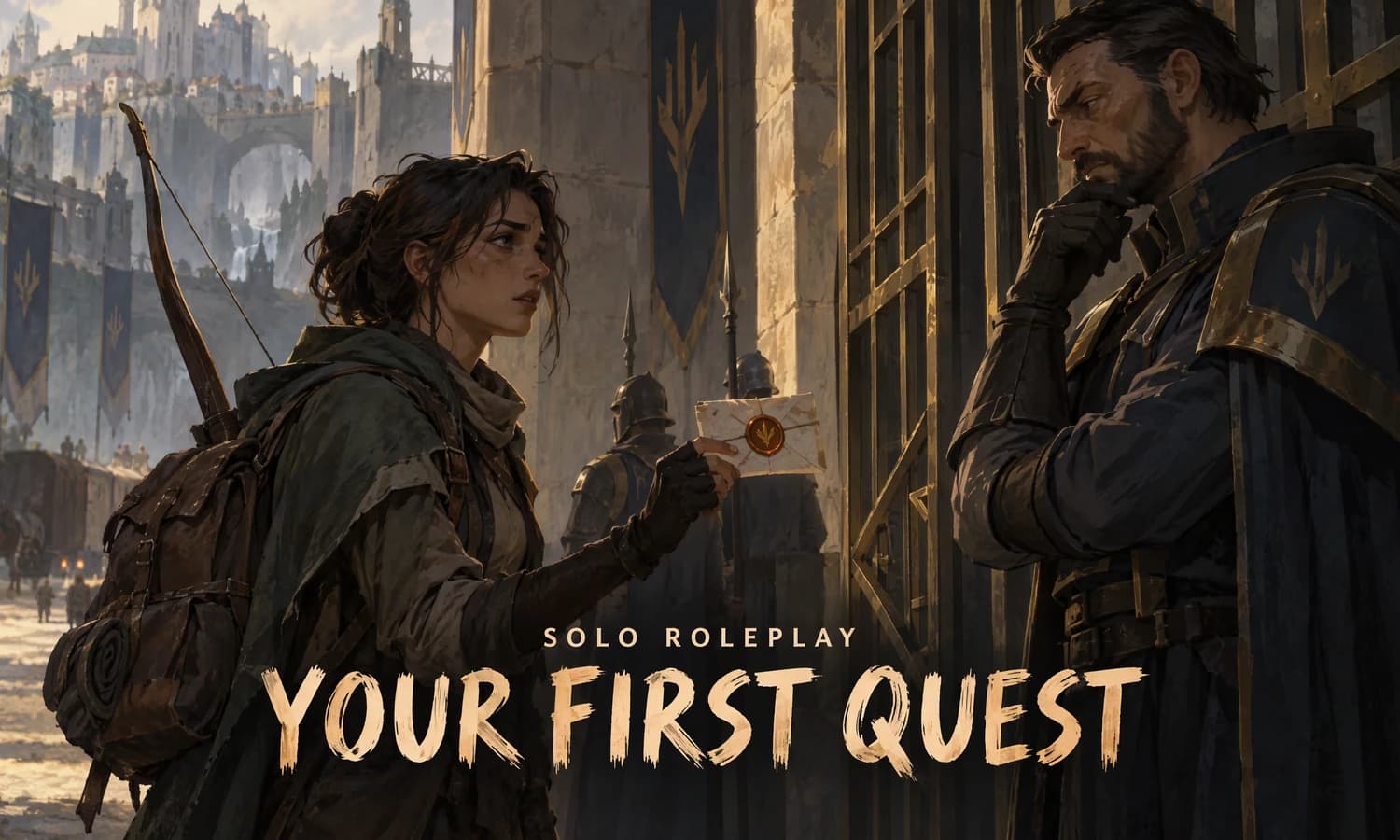
A useful action says what you want and how you try to achieve it. For example: “I ask the gatekeeper about the missing courier, showing the delivery seal to establish that I am expected.” The narrator has a clear goal, an approach, and an object to respond to.
Avoid deciding the result in the same sentence. “I convince the guard and enter unnoticed” skips the uncertainty. Try “I distract the guard with a question while watching for a safe way inside.” If a roll or further choice is requested, respond to that step before adding an unrelated action.
Use short sessions to build continuity
For a first session, aim to resolve one scene: question a witness, investigate a room, or make a difficult bargain. At the end, note the current objective, a name worth remembering, and the next intended action. Those three details are more useful than a long retelling of every line.
Treat AI narration as a collaborator that can make mistakes. If it contradicts a detail that matters, state the correction clearly and continue from the agreed situation. A specific correction is easier to use than asking the narrator to restart the whole story.
Return with the same Playworlds account to continue your saved adventure, including when you change devices. If a save is missing, check which account you used before starting a new adventure. Keep a short note of your last goal for your own reference; it does not replace the game's saved state.