
In this guide
A good AI DM gives the next move back to you
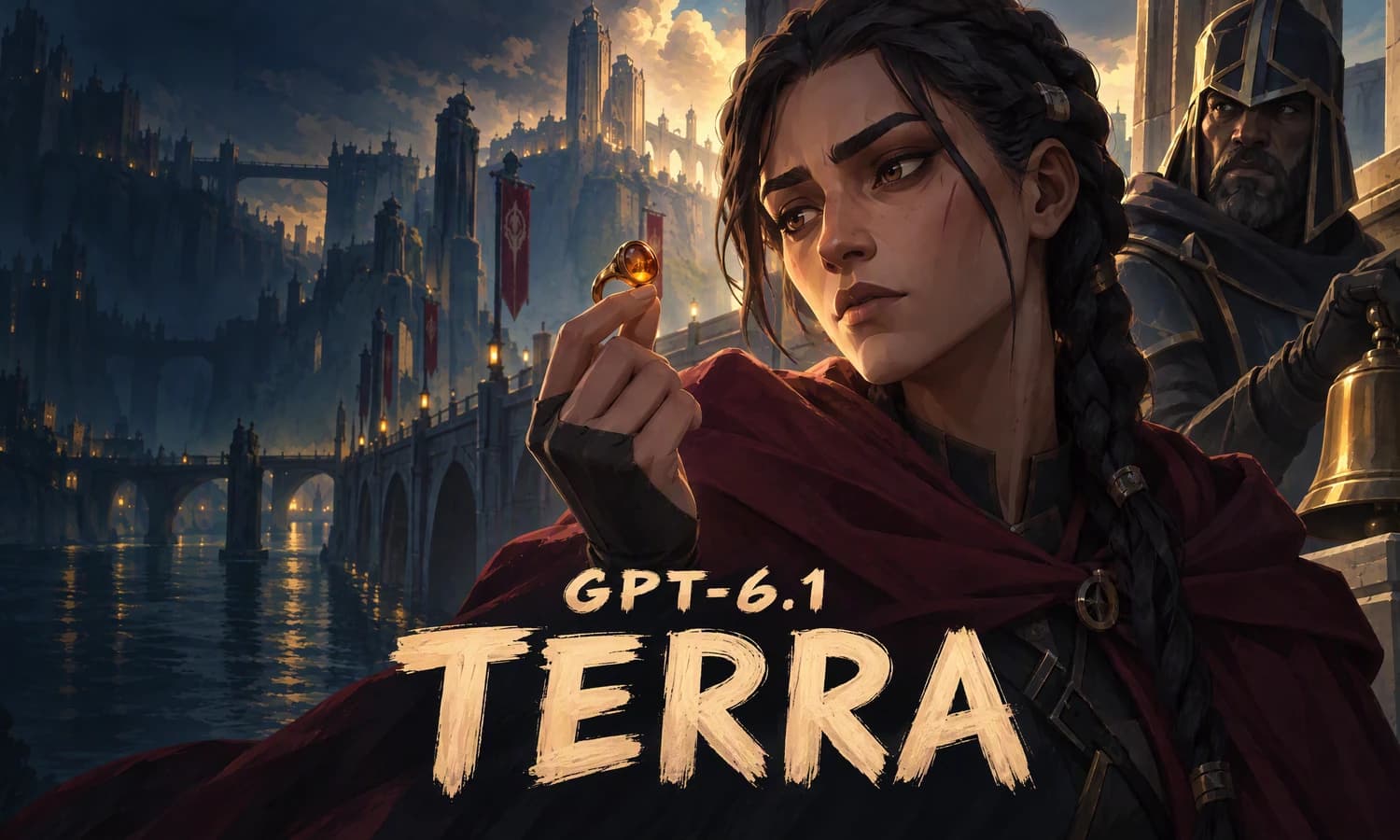
The bridge keeper recognizes the signet ring on your hand. He stops asking for a toll and reaches for the alarm bell. You have a decision to make: explain the ring, bluff your way past, or grab the rope. A good AI Dungeon Master makes that moment clear, then gives you room to act.
OpenAI describes GPT-6.1 Terra as a fast, efficient model with visual reasoning, computer use, and more natural writing. That combination makes it an interesting candidate for an AI DM. This article, researched October 27, explores how we would evaluate it for Playworlds; it does not announce a Terra integration or a measured improvement in our game.
Use natural writing to make choices easier to read
In AI D&D, beautiful prose earns its place by helping the player understand the situation. The bridge keeper needs a motive, the bell needs a visible consequence, and the player needs to know whether there is time to speak. A paragraph of atmosphere should not hide those facts.
Our proposed Terra turn would first answer the attempted action, then show its immediate consequence, and finish with an unresolved situation. If you show the ring, the keeper might lower his voice and ask who sent you. The narrator should not also decide that you surrender the ring, cross the bridge, and accept his quest. Those are your choices.
Keep the ruling and the story in agreement
Fluent narration can still make a poor game master if it invents a successful roll or spends an item twice. For a D&D-style system, the relevant rules and character state should establish what happened. The narrator can explain the outcome and bring it to life without silently changing it.
Suppose a failed attempt to silence the bell alerts the guards. The next reply should acknowledge the alarm even if the player makes a persuasive speech. The GM can offer a new opportunity, such as bargaining with the approaching captain, while keeping the earlier failure meaningful. Consistent consequences make improvisation feel fair.
Judge efficiency across a whole encounter
At the October 27 check, OpenAI lists standard API prices of $1 per million input tokens, $0.05 per million cached input tokens, and $5 per million output tokens. These are provider prices, separate from Playworlds credits or subscription terms.
Using those rates, an illustrative uncached call with 8,000 input tokens and 1,000 billed output tokens costs $0.013. This calculation excludes retries, additional calls, speech, images, and infrastructure. A cheaper call only helps the adventure if it resolves the action well: three correction turns can undermine both the budget and the scene’s momentum.
Test the same scene from several directions
To evaluate Terra as an AI GM, replay the bridge encounter with a friendly greeting, an unexpected spell, a failed check, and a return after saving. Look for answers that respect what the character can do and what the keeper already knows. A convincing single reply is a useful start; a consistent sequence is the real test.
Measure the wait until a usable turn arrives, including rule resolution and saving. Also count invented facts, decisions made on the player’s behalf, and replies needed to repair a contradiction. Those observations would tell us more about an AI D&D experience than a general coding or office-task benchmark.
Try the bridge-keeper premise in Playworlds
For an original adventure seed, imagine a city where every bridge belongs to a different guild. Your character carries a ring claimed by two rival families. Give yourself one immediate goal: cross the river before the evening gates close. Ask the keeper a question before deciding whether to reveal the ring.
You can explore this style of solo adventure through Playworlds’ worlds, characters, dice, and saved play. Terra remains a model to evaluate, while the useful lesson is available now: make one clear move, let the world respond, and keep ownership of your next decision.