
In this guide
A map should create possibilities for the player
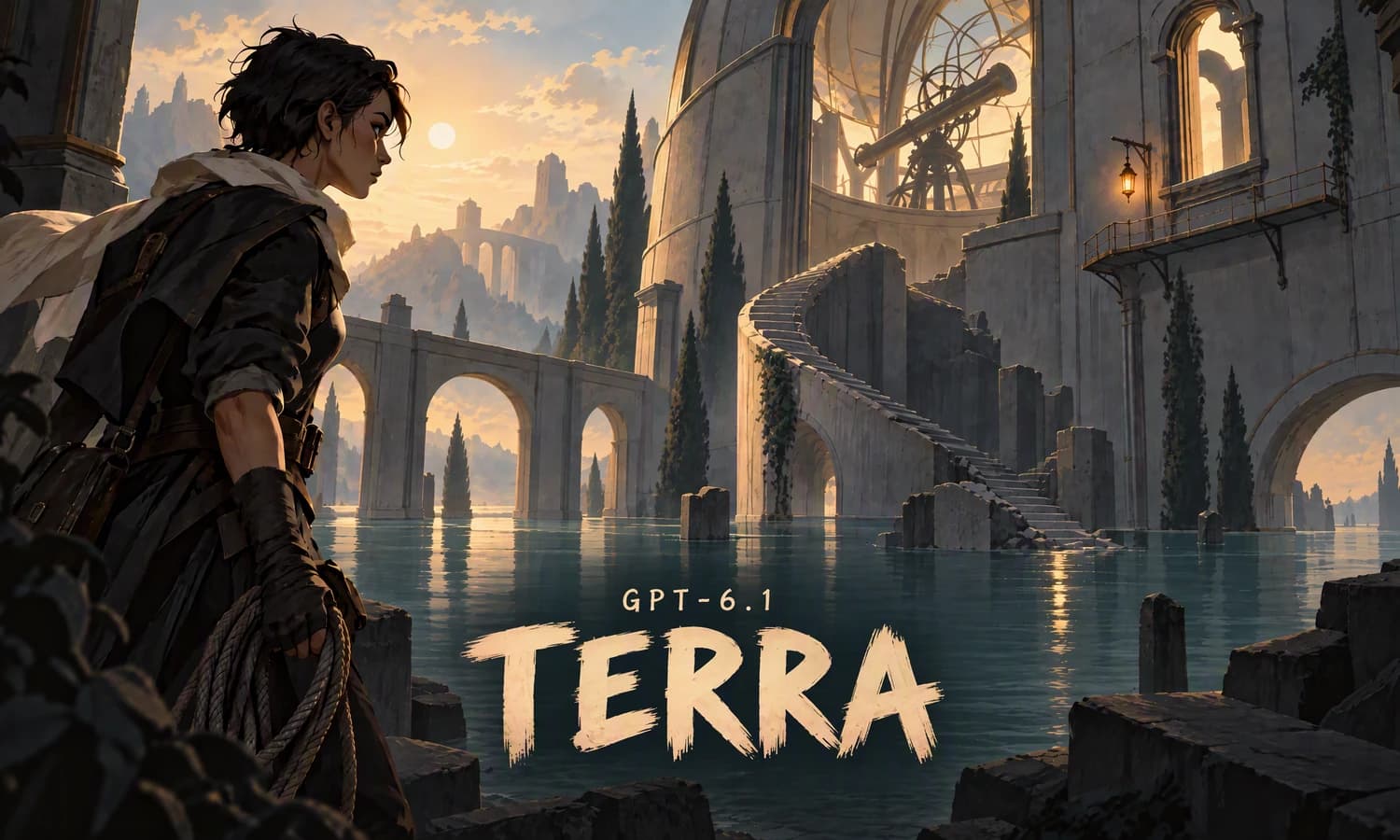
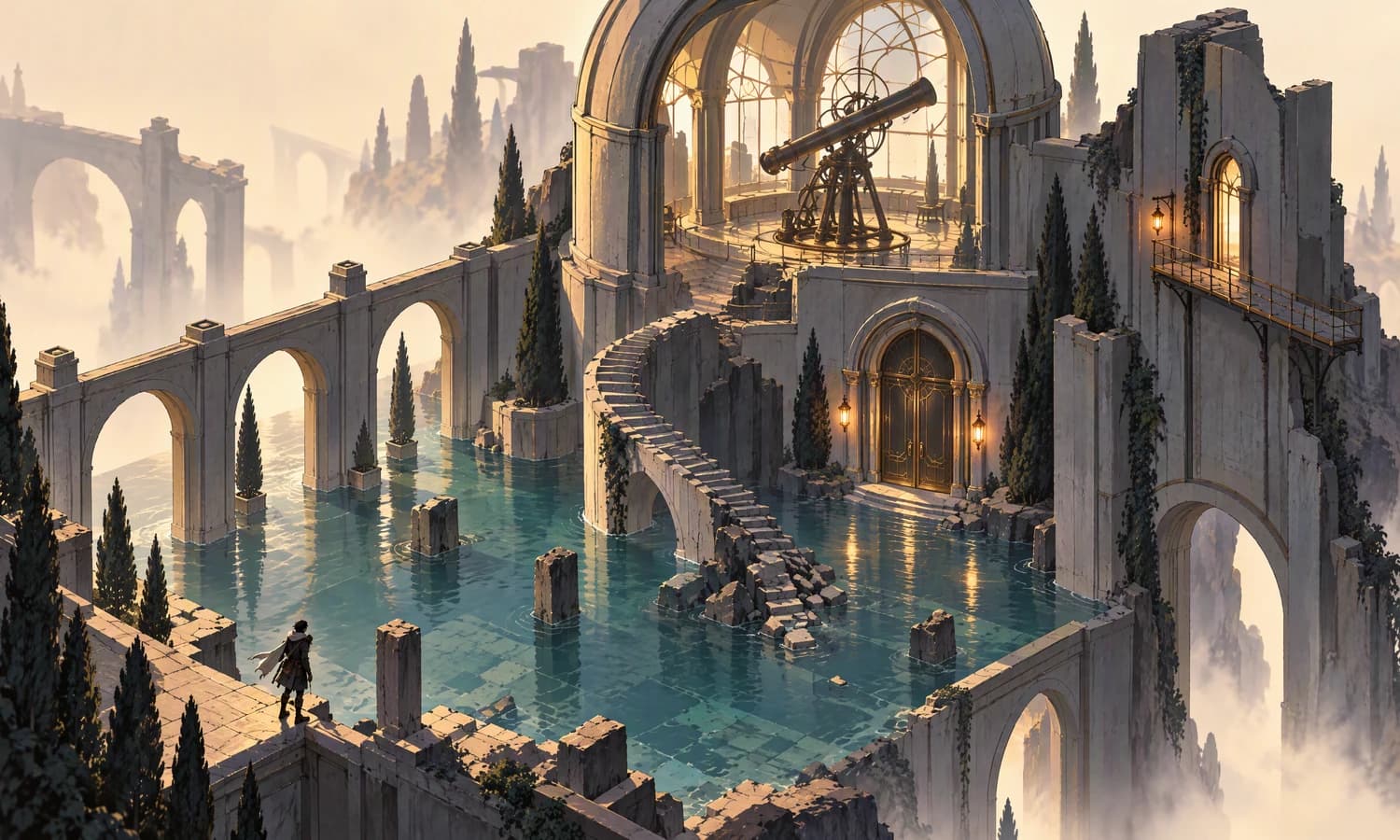
A ruined observatory sits above a flooded courtyard. Its main staircase has collapsed, but a narrow maintenance ledge reaches an upper window. That second route is the detail that makes the location playable. It gives a cautious rogue, a climbing fighter, and a curious wizard different ways to approach the same problem.
OpenAI’s GPT-6.1 Terra announcement emphasizes visual understanding alongside natural writing. For a DM or GM, that suggests a preparation workflow worth testing: examine a visual reference, identify useful spatial details, and turn them into an encounter brief. It does not establish that Terra can reliably referee a battle map, and this is a proposed workflow rather than a Playworlds image-upload feature.
Separate what the image shows from what you invent
Begin with observable details: two entrances, water around the building, a broken stair, and a circular upper room. Then label your creative additions: the keeper’s debt, a hidden instrument, and the reason the water is rising. Both kinds of information are useful, but they serve different purposes.
A preparation prompt could say: describe visible routes and obstacles, identify anything uncertain, then suggest three optional adventure hooks. If an image does not show the far side of a door, the AI should leave that space unknown. Treating a guess as established geography can produce a contradiction as soon as the character opens it.
Give each route a different kind of risk
For our observatory, the courtyard route is quiet but waist-deep in water. The maintenance ledge is dry but exposed. The main entrance is straightforward, although its bronze doors ring loudly when moved. These differences create decisions without requiring an elaborate map or dozens of encounters.
The GM should reveal enough for an informed choice. A player can see that the ledge is narrow before attempting the climb. A secret watcher may remain hidden, but the basic difficulty of the route should not appear only after the character commits. Clear description helps a risky outcome feel earned.
Use a reviewed scene brief during play
Once the location makes sense, write a concise brief containing the entrances, important objects, known obstacles, and current occupants. Review it before play. That brief gives the narrator a stable reference when the player returns to the courtyard or asks which windows overlook the stair.
Visual interpretation should support this preparation, while distance, movement, and line-of-sight rulings follow the game’s chosen rules and established facts. A dramatic illustration may distort scale or hide a passage. An AI’s confident description does not make those ambiguities disappear.
Evaluate whether the scene stays navigable
A useful Terra trial would ask about the same location from different viewpoints. Can someone in the courtyard see the upper window? What changes if the main doors are blocked? Can the character retreat along the route they used to enter? Compare the answers with your reviewed brief and mark contradictions.
Then play an unexpected action: lower a rope from the window, float a crate across the courtyard, or negotiate with the occupant. The best result would preserve the location while allowing a new solution. This is our proposed gameplay evaluation; we have not measured Terra’s map accuracy or encounter quality in Playworlds.
Build the flooded observatory as a text premise
To try this idea today, describe the observatory in a Playworlds Custom World premise. Include the three approaches and one mystery: the telescope keeps tracking a star that vanished a century ago. Your character arrives to retrieve its last observation before the rising water reaches the archive.
This starting point works as text and does not depend on an announced Terra integration. Keep the first session focused on entering the building and discovering one clue. A small location with understandable routes gives an AI D&D adventure room for creative choices and consequences.