In this guide
Judge Sol on an ordinary turn
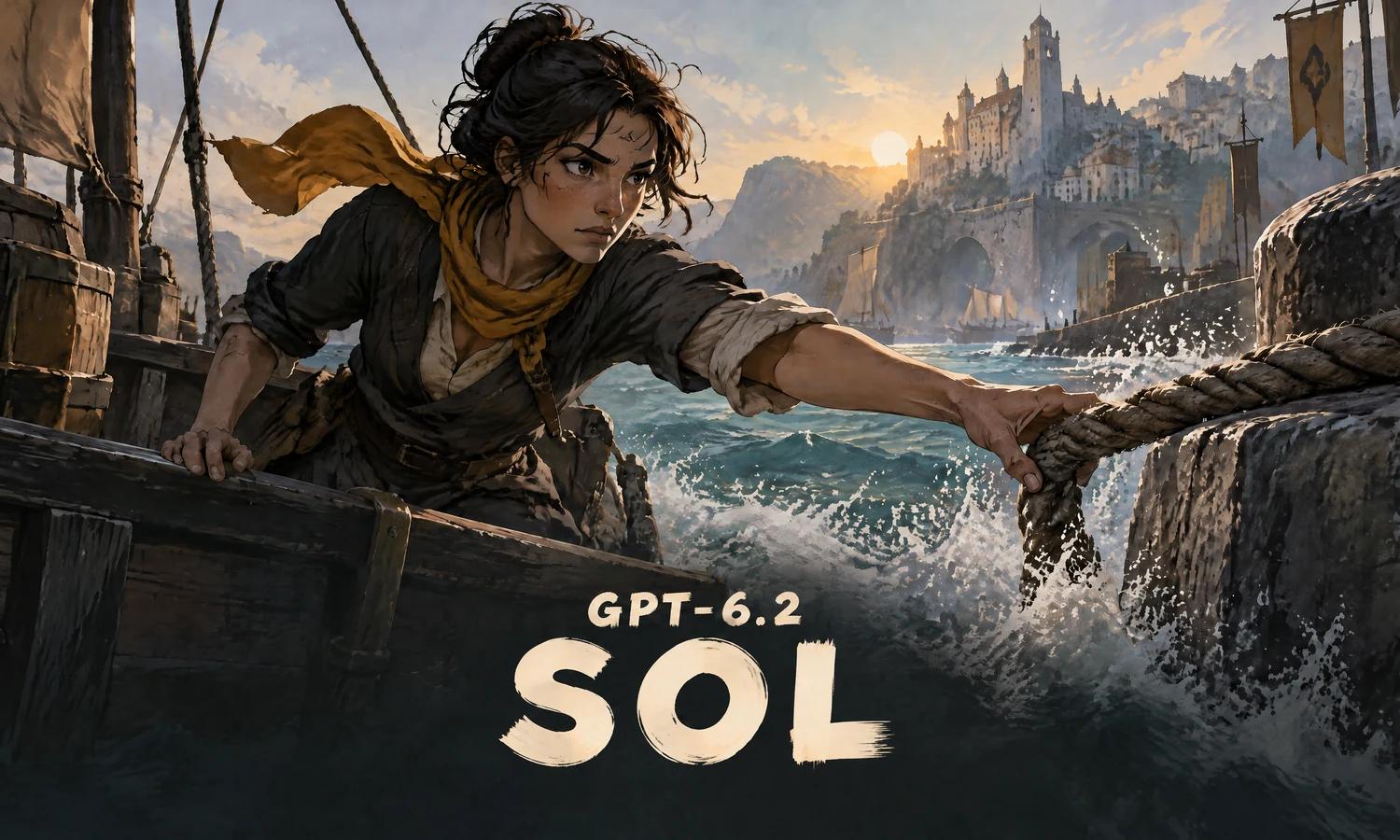
OpenAI introduced GPT-6.2 Sol on November 17, 2026, as the more efficient default alongside Astra. For an AI game master, the useful question is whether a normal turn comes back soon enough to keep you in the scene and clear enough that you know what to do next. Release benchmarks alone do not answer that.
A ferry pulls away from the quay while a loose rope trails in rising water. You tell the deckhand to grab it, but you do not say what your character does. A good reply can show the deckhand reaching, the rope tightening, and the remaining risk. It should not make you jump ashore or narrate a safe arrival you did not earn.
Ask for one consequence and one handoff
Try a three-part turn: resolve the action the player actually declared; show one visible change in the world; end at the next choice. ‘The deckhand catches the rope. It pulls taut against the ferry’s rail as the stern swings toward the pilings. What do you do?’ is enough. A menu is optional if the situation is already clear.
Make the handoff specific when the scene needs it. If you ask the deckhand to wait, the GM can hold the ferry at the current danger rather than inventing a different action. If you only ask what you can see, give information without automatically advancing the tide. The turn format is a ceiling on what to resolve, not a rule that every question must move time forward.
Measure replies you can actually play
Run a short scene with movement, dialogue, a rules question, and a failed action. Mark whether you could play on without undoing an invented decision. Separately watch time to first visible text and time to a complete usable reply, since a quick start doesn’t help if you still wait for the choice.
These are evaluation instructions, not measured Sol performance or a Playworlds model announcement. If you enjoy the rhythm, try the ferry setup in a Playworlds custom world and compare that experience on its own terms.