
In this guide
Design a situation, not a sequence of beats
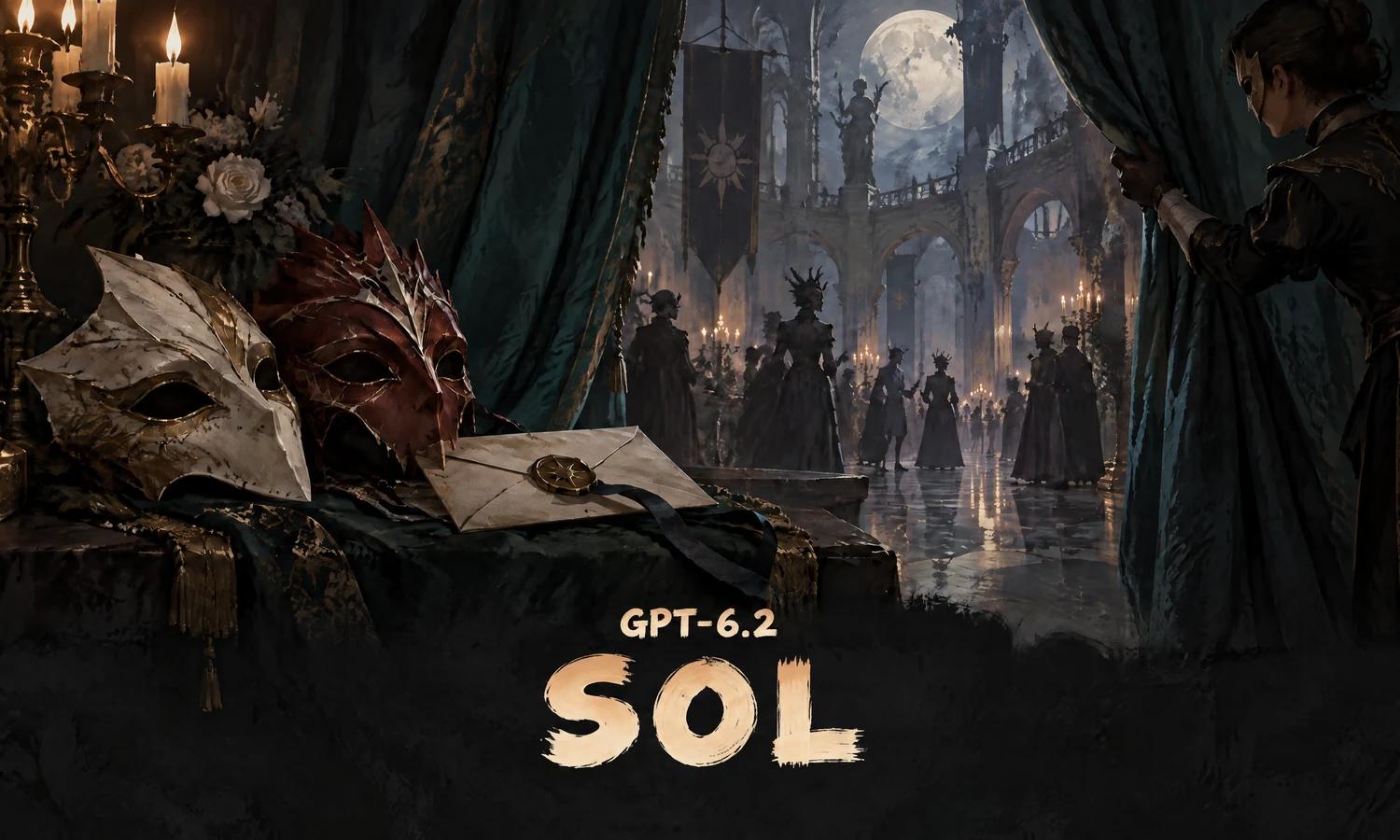
At midnight a courier will leave a masquerade with the invitation your party needs. The party can approach the courier, persuade a host, or wait at the side door. You do not need to predict which approach they will choose; you need to know who wants what and how the situation changes when they act.
Use GPT-6.2 Sol as a drafting partner for an encounter card rather than asking for a complete adventure. OpenAI positions Sol as its more efficient default. The masquerade is an illustrative exercise, not a hands-on D&D rules test or a statement that Sol is available in Playworlds.
Put five things on the card
Ask for an opening image, an NPC goal, a deadline, two available approaches, and a consequence if no one acts. For the masquerade: ivory masks by the door; the courier wants to leave unnoticed; the music stops at midnight; the guests may ask for a dance or approach the host; if ignored, the courier leaves for a named location. Extra approaches are welcome during play.
If you want mechanics, state your edition and supply the rules you actually use. Ask for suggested adjudication only where the outcome is uncertain. Mark unknowns for DM review: exact DCs, stat blocks, spell interactions, or whether a sourcebook at your table even allows an option. Don’t let a plausible-sounding number become a table rule by accident.
Give the card one unexpected player move
A player hands the courier their own mask as a distraction instead of following either suggested approach. Can you answer from the stated NPC goal and deadline? If not, add one sentence about what the courier fears, rather than writing a branch for every possible interruption.
Keep the card if it fits on one screen and you can use it without reading prose aloud. When the scene works, reuse its shape in another setting by swapping the goal and clock, not by copying the same masquerade. The Playworlds D&D page is a starting point for adapting it as a separate adventure.